The Barista Who Ruined My Morning Routine
I had this whole thing figured out. Every Tuesday and Thursday at 7:47 AM, I’d walk into the same coffee shop, order the same drink, and settle into the corner table with my laptop. The routine was sacred. Predictable. Perfect for someone who thrives on small, controllable rituals in an otherwise chaotic world.
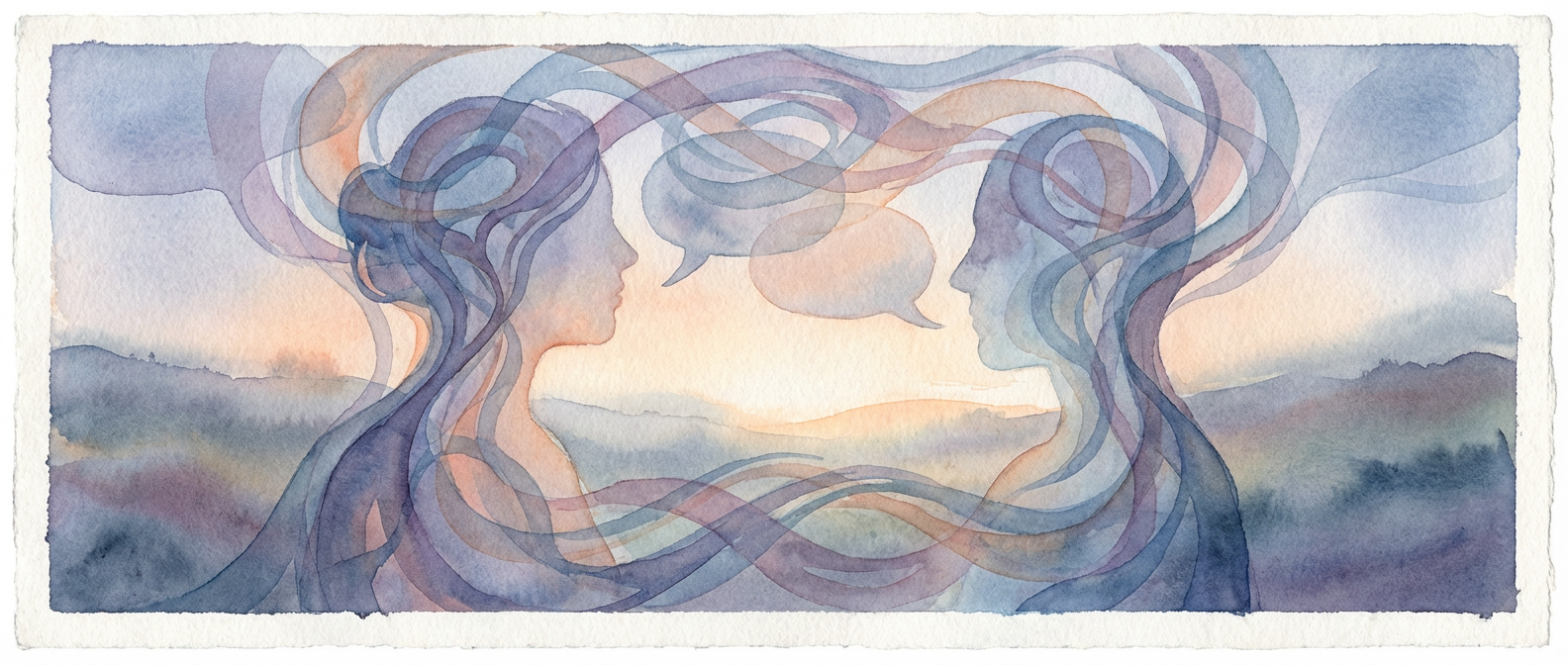
Then this new barista started working there. Mid-fifties, maybe older, with the kind of weathered hands that suggested a lifetime of work that wasn’t making lattes. Instead of the usual “what can I get you” dance, he looked at me and said, “You know, I’ve been watching you come in here for weeks. You always sit alone. Don’t you get lonely?”
I wanted to be annoyed. This was supposed to be my quiet time, my buffer before the day started demanding things from me. Instead, I found myself saying yes, sometimes I did get lonely. Just like that, my carefully constructed morning routine became something else entirely. We started talking about loneliness, about the difference between being alone and feeling isolated, about how modern life seems designed to keep us separate even when we’re surrounded by people.
Here’s what I learned: the conversations that stick with you rarely begin with an invitation. They start with someone breaking the unspoken rules of social interaction. They start wrong, which is exactly why they go right.

Why Uncomfortable Conversations Are the Only Ones Worth Having
Most of our daily conversations follow a script. How’s the weather, how’s work, did you see that thing on social media. We’re all performing a version of small talk that keeps us safely on the surface, never diving deep enough to hit anything that might complicate our day. It’s efficient. It’s comfortable. It’s also completely forgettable.
The conversations that change you are the ones that make you squirm a little. They’re the ones where someone asks a question you don’t have a prepared answer for, or challenges an assumption you didn’t even realize you were making. They force you to examine beliefs you’ve been carrying around without inspection, like old receipts in your wallet that you never bothered to throw away.
I think we’ve become too good at avoiding discomfort in conversation. We’ve trained ourselves to recognize the warning signs of a potentially awkward moment and steer away from it. Someone starts to get too personal? Change the subject. A topic veers toward something controversial? Time to check your phone. We’re so practiced at conversational exit strategies that we rarely stick around long enough to discover what might happen if we just stayed put.
But here’s the thing about discomfort: it’s usually a sign that something important is happening. When a conversation makes you feel slightly off-balance, it’s because you’re being asked to consider something from an angle you haven’t tried before. That feeling isn’t a bug in the system. It’s a feature.
The Stranger on the Train Who Got Everything Wrong
A few months ago, I was on a delayed train, trapped in that particular kind of travel purgatory where everyone’s plans have gone sideways and we’re all just trying to make the best of it. The man sitting across from me struck up a conversation about the delays, which evolved into a discussion about public transportation, which somehow morphed into him telling me about his theory that people today are too dependent on technology to solve problems that used to require actual human cooperation.
I disagreed with almost everything he said. His examples were cherry-picked, his logic was flawed, and his nostalgia for a “simpler time” ignored all the ways that time was actually more complicated for anyone who wasn’t a straight white man. But instead of shutting down the conversation or getting into an argument, I found myself genuinely curious about how he’d arrived at these conclusions. What experiences had shaped this worldview? What was he trying to solve with this theory?
We talked for the entire two-hour delay. I never changed his mind about anything, and he certainly didn’t change mine. But something shifted in how I understood the difference between being right and being curious. Sometimes the most valuable conversations aren’t the ones where you win or learn something new about the world. They’re the ones where you learn something new about how differently two people can experience the same world.
What We Miss When We Stay Safe
I think about that train conversation more than I probably should. Not because it was particularly profound or because we reached some kind of meaningful understanding. But because it reminded me how rare it’s become to sit with disagreement without trying to resolve it immediately. We’ve gotten so good at curating our social environments that we rarely encounter ideas that truly challenge us anymore.
Our algorithms feed us content that confirms what we already think. Our social circles tend to be filled with people who share our values and perspectives. Even our entertainment choices are increasingly personalized to match our existing preferences. We’re living in a world of intellectual echo chambers, and while that’s comfortable, it’s also limiting in ways we don’t always recognize.
The conversations that stick with me aren’t the ones where someone told me exactly what I wanted to hear. They’re the ones where someone said something that made me stop and think, “Wait, I never considered it that way before.” They’re the moments when my assumptions got poked and prodded, even if they ultimately remained intact.
When we avoid uncomfortable conversations, we miss the chance to stress-test our own beliefs. We miss opportunities to understand how other people make sense of the world. We miss the particular kind of growth that only comes from having your perspective challenged by someone who sees things completely differently than you do.
The Art of Staying Present When It Gets Weird
Learning to stay in uncomfortable conversations is a skill, and like any skill, it requires practice. It means resisting the urge to immediately defend your position when someone challenges it. It means asking questions instead of making statements. It means being willing to say “I don’t know” or “I hadn’t thought about it that way” without feeling like you’re admitting defeat.
The barista at my coffee shop taught me something about the value of direct questions. The stranger on the train showed me that disagreement doesn’t have to end in argument. But maybe the most important thing I’ve learned is that the conversations worth having are often the ones we’re most tempted to avoid.
I’m curious about your experience with this. What conversations have stuck with you long after they ended? Have you noticed yourself avoiding certain topics or steering away from uncomfortable moments? What would it look like to lean into those moments instead of away from them?
