The Setup: Me vs. The Internet
Six months ago, I would have told you that all this talk about Ozempic and Zepbound was basically celebrity nonsense dressed up in medical language. People were using diabetes medication to lose weight because they couldn’t just eat less, and the whole thing felt like we’d collectively decided that actually changing our habits was too inconvenient. I had opinions about it. Strong ones. The kind you hold confidently when you haven’t really looked into anything.

Then I had my annual physical, and my doctor asked if we’d ever discussed GLP-1 medications. Not in a pushy way. Just a question, casual as asking about my sleep. I remember thinking she was about to give me the same spiel I’d already heard a hundred times. She didn’t. She actually changed how I think about the whole thing.
The Numbers I Wasn’t Paying Attention To
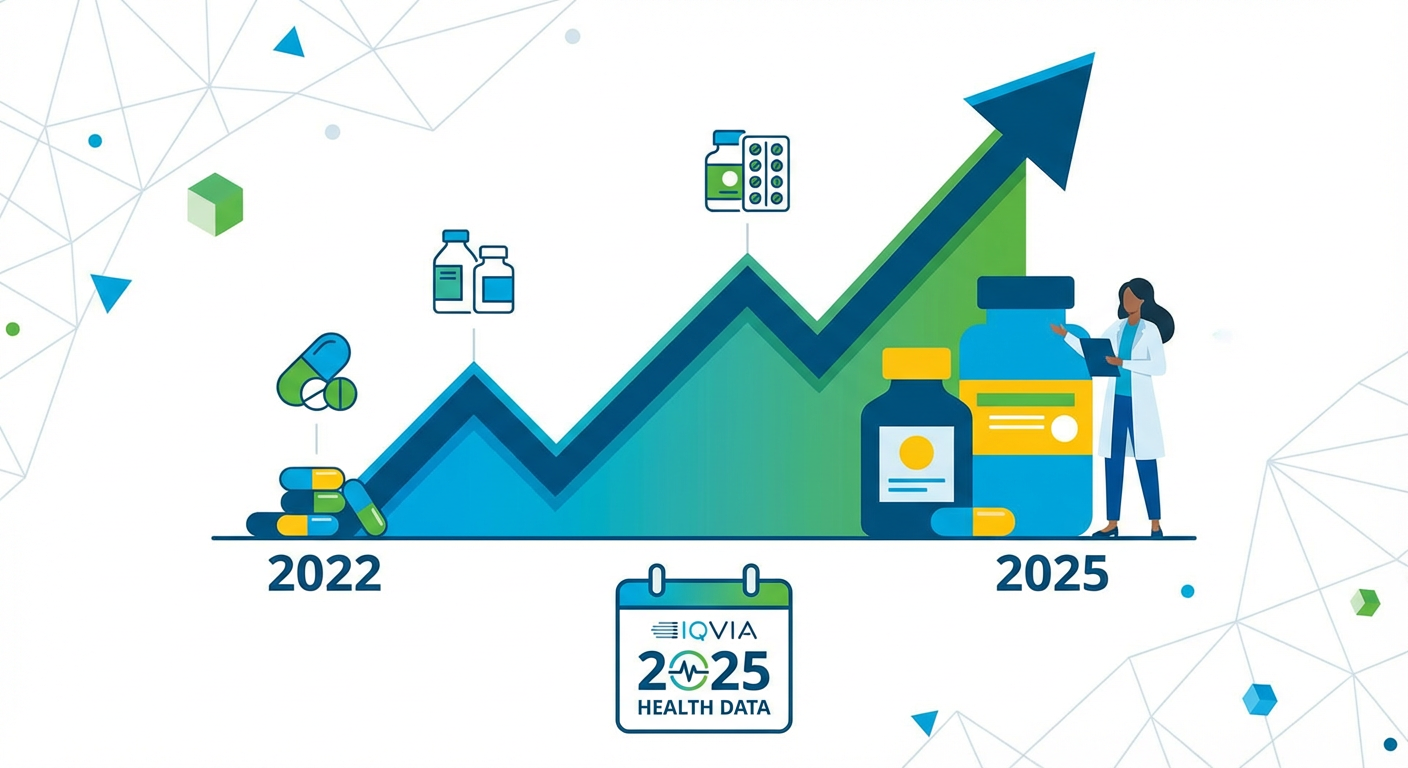
It turns out that while I was rolling my eyes on social media, something pretty significant was happening in actual medicine. Prescriptions for GLP-1 drugs have skyrocketed in the past few years. More than 400% increase between 2022 and 2025, according to IQVIA data. That’s not people jumping on a trend. That’s a wholesale shift in how the medical community approaches weight management.
What actually got my attention was the research my doctor pulled up. A major trial published in the New England Journal of Medicine showed that tirzepatide (that’s Zepbound) resulted in an average weight loss of 22.5% of body weight over 72 weeks for adults living with obesity. I read that number three times. Twenty-two point five percent. That’s not marginal. That’s not the kind of result you get from slightly cutting back on carbs.
The American Medical Association formally updated their obesity treatment guidelines in 2025 to classify GLP-1 medications as a first-line treatment option, meaning they’re now considered on the same level as lifestyle changes. This wasn’t some fringe decision. This was the actual establishment catching up to what the data had been saying for a while. My doctor mentioned this while reviewing my chart, and I felt that particular sting of realizing I’d had strong opinions about something I hadn’t bothered to understand.
The Part Where I Got Honest About My Assumptions
Here’s the thing about changing your mind: it requires admitting that you were wrong, which is uncomfortable in a way that’s hard to overstate. I had bundled GLP-1 drugs into a category with all the other things I’d mentally filed under “shortcuts people take instead of doing the work.” But my doctor didn’t present it that way at all. She presented it as a tool. One option among several. Not instead of lifestyle changes, but sometimes alongside them.
She also talked about something I hadn’t considered: the biological reality of how weight regulation actually works. GLP-1 medications don’t just suppress appetite through sheer willpower denial. They interact with hormonal systems that control hunger and satiety. Your body isn’t broken because you “lack discipline.” Sometimes the systems regulating your weight have gotten out of sync, and medication can help recalibrate them. Framing it as laziness was not just unkind but scientifically backward.
What surprised me most was learning that about one in eight American adults have tried a GLP-1 medication at some point, according to a KFF GLP-1 medication tracking poll. That’s a lot of people. Doctors, teachers, construction workers, people I probably know. And the biggest barrier preventing people from continuing with these medications? Cost. Forty-three percent of people surveyed cited affordability as the main reason they stopped. That’s a real problem. That’s not character weakness. That’s a broken system.
What This Actually Means (Beyond the Hype)
I’m not saying I immediately went home and demanded a prescription. My doctor and I talked about whether it made sense for my situation specifically. She asked questions about my habits, my history, what I’d already tried. We looked at this as something that might be useful in my particular life, not as a one-size-fits-all solution or a replacement for eating better and moving more. That distinction mattered to me because it felt honest.
What I did realize is that my reflexive dismissal of these medications was less about rigorous thinking and more about tribal affiliation. I was on “Team Real Hard Work” and therefore suspicious of anything that looked like an easier path. But that’s not how medicine works. Medicine doesn’t care about your personal brand. It cares about whether something helps people live better lives, and increasingly, the evidence suggests that for some people in some situations, GLP-1 medications do exactly that.
The pharmaceutical side of this is worth noting too. Novo Nordisk reported that global sales of Ozempic and Wegovy exceeded $25 billion combined in 2025, making them among the top-grossing drugs ever made. That’s a lot of money, and money shapes how we talk about things. But the existence of hype doesn’t mean the underlying science is wrong. It just means we need to be more careful about separating what’s marketing from what’s actually there.
Sitting With Uncertainty
I don’t have a neat conclusion for you because I’m still figuring this out. That feels important to say. I came in with absolute certainty that I was right about this, and I left with questions instead. I’m still skeptical of the cultural moment we’re in where everything is being treated as a GLP-1 issue. I’m still concerned about access and cost and whether we’re using medications as a band-aid for larger problems in how we live.
But I’m also aware that my skepticism was rooted in incomplete information and a lot of judgment I hadn’t earned. The most honest thing I can tell you is that I was wrong to dismiss this without understanding it, and I’m grateful to my doctor for not just accepting my dismissal. She asked better questions than I had been asking myself. That made all the difference.
Have you found yourself changing your mind about something you felt strongly about? I’d be genuinely curious what that process was like for you, and whether there are other health topics where you’ve noticed the science or guidelines shifting in unexpected ways. The conversation isn’t over here, and I don’t think it should be.
