The TikTok Moment I Couldn’t Ignore
You know that feeling when something pops up everywhere and you suddenly can’t pretend it doesn’t exist? That was the dopamine menu for me around November. My For You Page was flooded with it. My group chat was dissecting it. Even my therapist casually mentioned it like I should already know what she meant. The #dopaminemenu hashtag had apparently accumulated over 800 million views by early 2025, which is the kind of number that makes you feel both behind and skeptical at the same time.
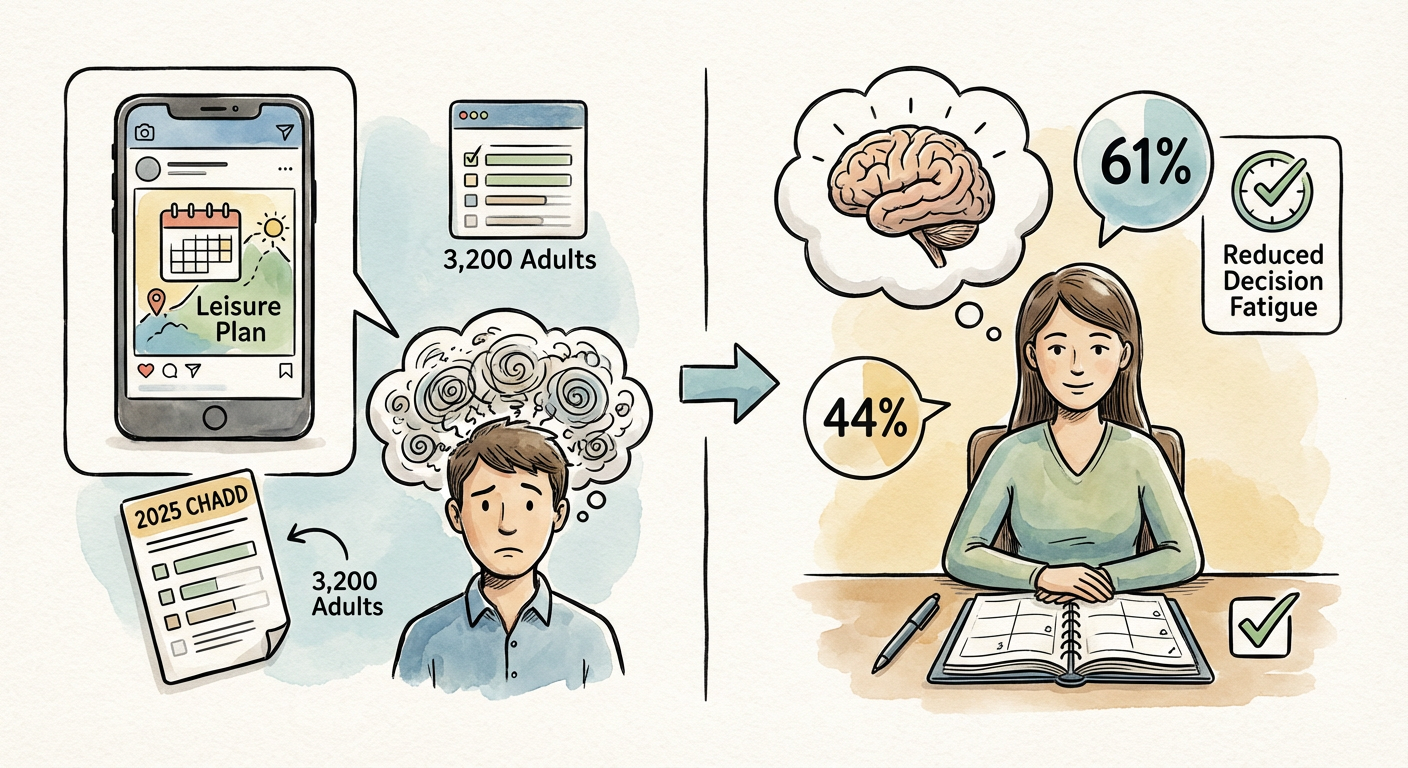
For those who somehow missed it, the dopamine menu is a structured list of activities organized by effort level and reward potential. Instead of doom-scrolling or staring at your ceiling when your brain feels like scrambled eggs, you have a ready-made menu to reference. It’s meant to help with that decision fatigue that hits when you know you need to do something but have zero bandwidth left to figure out what. I looked at the concept and thought, “Fine. I’ll try your little internet thing.”
Building My Menu and What Went Wrong Immediately
I spent an embarrassing amount of time in Notion creating my dopamine menu. Which is funny because optimizing the menu became its own form of procrastination. I made color-coded categories: “No Effort, Actual Reward” (scrolling, watching, napping), “Low Effort, Medium Reward” (stretching, making tea, reading), “Medium Effort, High Reward” (cooking, writing, organizing), and “High Effort, Epic Reward” (hiking, creative projects, social plans). According to a CHADD survey of over 3,000 adults published in early 2025, about 44 percent of people had tried some version of this after seeing it online, and 61 percent of those reported less decision fatigue. I was betting I’d land in that second group.
What I didn’t anticipate was how honest the menu would force me to be about what actually sounds appealing on a given day. The menu went up on my wall in late January. I used it religiously the first week. By week two, I noticed something uncomfortable: I almost never reached for the “Medium Effort, High Reward” activities. I kept gravitating to the same three things from the low-effort category, even on days when my energy was fine and my brain wasn’t fried. It was like watching myself in real time choose comfort over everything else, and having a laminated reference sheet made it impossible to pretend that wasn’t happening.
Eight Weeks of Awkward Self-Reflection
I stuck with the menu for eight weeks because I’m stubborn like that. Around week four, I added more activities to the low-effort section. Around week six, I started color-coding my actual choices to see patterns. By week eight, I had a detailed tracker of what I was reaching for and when. This is the part where I’m supposed to tell you I discovered some profound life lesson. The real discovery was far more mundane and slightly mortifying: I’m not actually struggling with dopamine regulation or ADHD or decision fatigue the way I thought I was. I’m just genuinely lazy when given the option, and I’d been using productivity language to avoid confronting that.
Dr. Ned Hallowell, who wrote ADHD 2.0, described the dopamine menu concept in ADDitude Magazine on dopamine menus as essentially “CBT in meme form” because it aligns with behavioral activation therapy principles. The thing is, behavioral activation therapy works when you actually activate. When you sit around examining your menu and choosing the path of least resistance, you’re not doing the therapy part. You’re just cataloging your avoidance in an organized way.
The menu itself wasn’t wrong. It’s genuinely clever for what it’s designed to do. But my problem wasn’t a lack of options or structure. I just didn’t want to do the harder things badly enough, and no color-coded Notion template was going to change my fundamental preferences about comfort versus growth.
What This Actually Taught Me
The embarrassing thing you learn when you force yourself to pay attention to your actual choices is how much you’ve been bullshitting yourself. There’s something clarifying about it once you get past the initial sting. I wasn’t failing at the dopamine menu. I was succeeding at it in a way that revealed something true: most of my obstacles aren’t system-based. They’re choice-based. I have plenty of options. I’m just consistently picking the comfortable ones.
That sounds obvious written out, but there’s a difference between knowing something theoretically and watching it play out in data you collected yourself. There are an estimated 366 million adults with ADHD globally, according to research in Lancet Psychiatry’s ADHD prevalence meta-analysis, and plenty of them genuinely benefit from this kind of structured approach. I’m not saying the dopamine menu is useless. Notion reported that dopamine menu templates were downloaded over a million times in the last quarter of 2024 alone, making it the second most popular wellness template after habit trackers. People aren’t downloading things by accident. It works.
But for me, the dopamine menu turned out to be less of a productivity tool and more of an accidentally honest mirror. Sometimes the most useful thing a tool can do is show you something you didn’t particularly want to see.
Where I’m At Now
I still have the menu. I just don’t use it the same way. Now it mostly reminds me that structure is easy. Actually changing what you choose to do with that structure is the hard part, and it requires wanting the outcome more than you want the comfort. Some days I want the harder activities more than the comfort. Most days I don’t. But now I know which category that falls into for me, instead of pretending I’m dealing with something neurological when I’m really just dealing with basic human laziness dressed up in productivity language.
I’m curious whether you’ve tried a dopamine menu and what actually happened. Not the highlight reel version, the real one. Did it change how you spend your time, or did it just become a very organized way to confirm what you already knew about yourself? I’m genuinely interested in whether this was specific to how my brain works, or if other people have looked at their data and felt that same awkward recognition.
